

Gas Patio Heater Regulator
It is important to know how to utilize a propane patio heat if you need to stay warm during the cold winter. Matthew Griffith, chief of the prevention division at Montreal's Fire Department, says that shoppers should look for products with safety certifications.
It's also important to ensure that there aren't any combustible materials in the vicinity and that the patio heater is properly attached.
Pressure Regulator
Gas regulators are mechanical appliances we use in our homes and cars every day without even giving them a second thought. Their invention first introduced 135 years ago, changed the way propane and natural gas are used for heating, cooking and welding with oxyfuel. There are many variations in regulator design, however their primary purpose is the identical. The regulator uses a pressure sensing element typically a fabric-reinforced diaphragm, to control the position of the valve plug, and to limit the flow of gas.
The diaphragm connects to the stem of the valve by rods that run through the diaphragm and spring before entering the valve. The mechanism is able to detect the gas pressure in the home or pipeline and adjusts the valve plug's position to match the demand. As the gas consumption in the home decreases and the pressure decreases between the regulator and the house. The diaphragm deflates downward and the valve plug moves closer to the orifice to limit the flow. As the demand for gas increases in the home the valve opens up more, thereby increasing the flow.
The valve plug stays shut until the demand of the house decreases. The valve then opens to increase the flow. This process, referred to as"sizing," is the basic operation of the regulator.
When the valve is opened, pressure builds up in the main chamber which is connected to the outlet port of the hose by venturi tubes. This pressure is regulated by changing the screw or handle located on the outside of the regulator. When the screw is turned counterclockwise, it increases and decreases the pressure. When it is turned clockwise, it decreases the pressure.
When choosing a regulator for pressure, keep in mind that the nominal maximum and minimum pressure is set by commercial standards and not the pressure of the gas in the supply line. The regulator must be compatible with the hose you are using. Choose a hose which is whistle-free, that has various sizes of rings to stop resonant sounds from accumulating throughout the hose.
Thermocouple
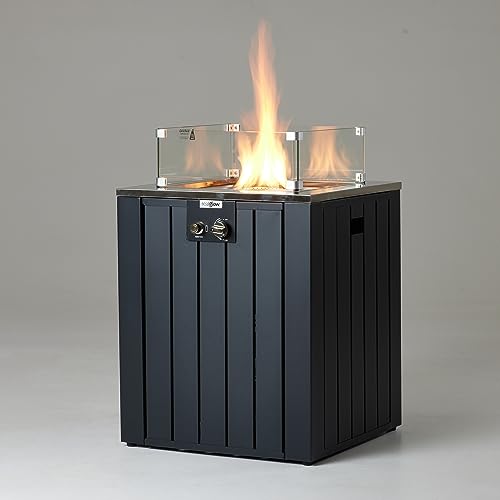
Thermocouples work on the principle that metals of different composition when in contact at their respective ends can generate the voltage even if they are at wildly different temperatures. They are used to detect temperatures that differ between points of an electrical circuit and transform that data into an electronic signal that can be read by a thermocouple gauge or other instrument. Thermocouples offer a number of advantages over more common sensors like thermistors, including the ability to measure extremely high temperatures and operate in harsh environments.
A pair of metals that are dissimilar is connected to one end of the sensor, forming the measuring (aka hot) junction, while the other is kept at a fixed temperature, also known as the reference (aka cold) junction. Thermocouples create small voltages however, they're passive devices that don't need power to perform their functions. The voltage generated is proportional to the temperature difference between the measuring junction and the reference junction. The thermocouple manufacturers and organizations that offer metrology standards, such as NIST, provide reference tables for the function E (T). displaystyle scriptstyle e(T) For each particular type of thermocouple.
There are three kinds of thermocouple junctions: an exposed, grounded, and welded wire. The exposed type of junction protrudes from the protective sheath, and provides the fastest response. A thermocouple that is grounded is recommended for use in environments with corrosive elements. A thermocouple welded to a wire is physically separated from the sheath with mgO powder to prevent penetration of moisture or gas which could cause mistakes.
A thermocouple that is welded has the added benefit of being more resistant to vibration. It is recommended to use it in abrasive environments with pressures of up to 3000 psi. A thermocouple that is damaged is usually caused by an insufficient the polarity. If the sheath isn't properly polarized, the two ends of the thermocouple will have different voltages at the junction of measurement which could result in an inaccurate reading and possibly damage the instrument. A faulty thermocouple can also result from an incorrectly calibrated or installed sensor.
Thermostat
Contrary to electric heaters, which need to be wired into the wall Gas patio heaters are portable and use natural gas or propane cylinders as fuel. Thermostats regulate the flow of energy into these cylinders to ensure that they do not overflow but still provide heat as needed. The thermostat does this by sensing the temperature of the air that is passing through it. The thermostat also senses when the room is cooling down to a comfortable level and turns off the heating.
propane patio gas are the most common. It is controlled by a microcontroller which converts a change in electrical resistance into a measurement of temperature. It is able to accomplish this more accurately than the older mercury switch thermostats that used mercury coils with three wires that moved in accordance with the temperature. This enabled the thermostat to tilt a switch made of mercury that was connected to an electrical circuit to an air conditioner or heater by turning it off and on.
Another type of thermostat is one that's mechanical. The thermostat is opened when the wax contained in the small cylinder begins to melt, which is around 180 degrees F. (Different thermostats have different opening temperatures). When the wax is hot, a rod connected to the thermostat opens the valve. As the room cools, the wax contracts and the rod is pulled back into the cylinder, closing the valve.
There are thermostats that can be programmed to alter at different times of the day. You can save energy by setting your heating to turn on and off while you're at work or sleeping, instead of having it running all the time. You can also set the thermostat to come on earlier so that your home is at a comfortable temperature when you return from school or work. Thermostats are also usually equipped with an element known as the heat anticipator, which stops the heater from switching off too early. This is due to the fact that certain areas of the house reach the desired temperature before the thermostat.
Pilot Light
Many newer heating systems, homes and furnaces have eliminated entirely with pilot lights. However, older homes still use them to ignite gas in the burner chamber. It is important to know how to safely restart the pilot light if it ever fails.
A pilot light produces tiny flames that heat the thermocouple. The thermocouple generates electricity, and keeps the gas valve open. When the pilot flame goes off the thermocouple cools and ceases to produce electricity, closing the valve. Pilot lights are used in most natural and propane-fueled appliances, including fireplaces, water heaters, barbecues, grills, furnaces and hot tubs.
To relight a pilot light, you must first shut off the gas on the appliance. Then you need to remove any doors or panels that may be in the way of accessing the pilot light. Follow the instructions on the front to open the pilot light tube. After propane patio gas lit the pilot light, return the knob on the gas valve to the "on" position.
Safety is the primary reason to keep a pilot light lit. If it's accidentally shut off, the gas that is constantly venting out of the pilot light tube can accumulate in your home until sparks from the spark from a cigarette lighter or static electricity ignites it and causes an explosion. The tubes designed for pilots have a built-in cutoff valve to keep this from happening.
A pilot light that is constantly burning is not just hazardous, but it also wastes energy. Various studies have shown that a pilot lamp can consume between $7 and $18 of gas every month. This waste of fuel also puts a heavier load on the air cooling system during summer time. Another issue with a pilot light is that it could attract spiders, who can spin webs that can clog pilot tubes. A constant flame can emit trace quantities of the compound Mercaptan, which is the cause of the rotten-egg smell in natural gas. If you're ever concerned about these issues, you should consider purchasing a gas fireplace with a remote control or replacing a fireplace with a more efficient, modern model.